Freddy Manfred was three years older than me. Wiry, thick black hair, and dark eyes, his natural expression was a smile. His cheeks would puff out, eyes narrow, and teeth seemly grow larger. As far as I could tell, though, he had no friends. He was always outside, in his barn or orchard, but never really doing anything. He didn’t have toys or interests other than being in the world, an observer of everything.
That’s a seven-year-old’s perspective, which was how old I was when we met. Freddy appeared out of nowhere as I climbed the sour cherry tree next to the fence between my backyard and his family’s orchard. I was eating cherries by the handful as I went up.
“Those cherries are for pies,” he said out of the blue.
I hugged a branch tightly and peered around until I found him. He was leaning against the fence, waiting silently. I would come to know that as Freddy’s trademark interaction style—he’d say something, usually one sentence, make a claim or offer an opinion, and then wait for a response. He’d wait and wait, and if no response came, he’d continue to wait, until he had another claim to make.
A week after we met, Freddy invited me into his yard. I climbed the fence, and he led me into his family’s small barn. It was an oversized shed really, with a couple of horse stalls. He didn’t own a horse but one day he would, he said. His dad promised him.
The stalls were spotless, no dirt, straw, or dust anywhere. The rest of the barn was filthy, littered with broken tools, thick dust, and other debris. The corners and rafters were a hodge-podge of dusty cobwebs.
Moving past the stalls and into the dark barn interior, Freddy showed me where he planned to keep the grain for the horses. The bin was filthy. To my dubious look, he said he’d clean it out, of course.
He showed me the empty water trough and a small room where he said they would hang the saddles and riding gear. Again, when the time was right, he said, he’d clean it out.
“Now, look at this. This is what I want to show you,” he said. From below a counter, he pulled out an old milk crate. Inside was a pile of porn magazines.
“These,” he said, holding the one on top open to a full spread, “were my dad’s. He threw them away.” He looked at me as if to say, yes, unbelievable isn’t it. “If he knew I had them…” he started and stopped.
“What would he do?” I asked.
Freddy shrugged. “I don’t know. He’d be sad.” He closed the one on display and placed it back in the crate.
“Doesn’t he come in here?” I said. “Won’t he find them?”
Freddy considered the question for a moment. “No, not really.”
I felt a need to push for more. “But what if he did?”
Again Freddy considered the question, then sighed. “He’d probably think he put them there. He does that a lot. He wouldn’t want to think it was me.”
I couldn’t fathom the fact Freddy had pulled the porn from the garbage and how easily he could get away with, even if his dad found it. My life centered on not getting caught for things I did, none of which measured up to what Freddy had done.
Freddy never showed me his porn stash again. Looking back, I imagine he realized he was wasting his time sharing it with me. Maybe he knew I might even jeopardize his secret. He still wanted me around though.
One afternoon, after taking stock of the many cherry and apples trees in his family’s orchard, with Freddy pointing out what each was good for, he invited me into his house. He lived in the only two-story house in unincorporated Deming, an enclave of about twenty small, wood frame, single family homes tucked between cornfields and two creeks. My house was one of the smaller ones—a shack really, not even six five hundred square feet, although no one was counting. Freddy’s house sprawled across his yard, every inch of it a mustard yellow color made larger by add-ons, a new room here, another there, a third around the side. The house set on a corner lot. Its front door faced one street; the barn-shed another. The overgrown orchard, with its raggedly fruit-producing trees, was behind the barn-shed. Freddy said it would one day be the horse’s pasture. “They are going to love the apples. The cherries…,” he shook his head, “I seriously doubt it.”
The inside of Freddy’s house was a maze of narrow paths. Clutter was everywhere, creating mountainous caverns. Clothes, furniture, books, toys, you name it, were piled everywhere there wasn’t furniture.
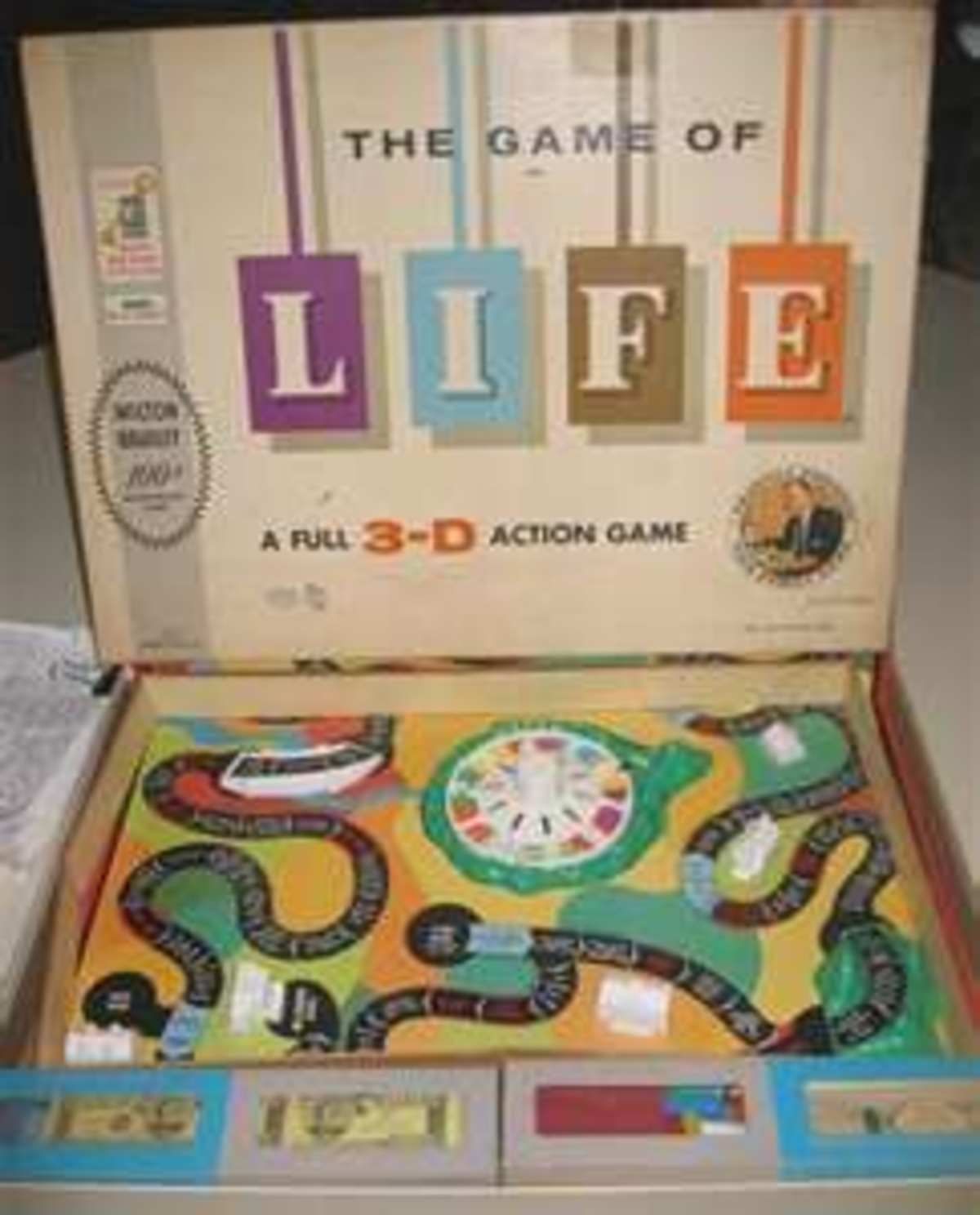
Freddy’s mom and dad welcomed me in, insisted I stay for dinner and afterward game night. A stack of games constituted one of the mountain piles in the dining room. Each night, after they ate, the family played board games until bedtime. Monopoly, The Game of Life, Mastermind, and Operation, to name a few.
Because they had only four chairs, Freddy was consigned to a piano bench pulled up to the table. I sat next to Clare, his four-year old sister. From the moment she saw me, Clare was in love with me, calling me K because she thought it was the first letter of Chris. She called Freddy F, and her mom and dad, M and D, respectively. “It’s her thing,” Freddy said. “My parents told me I better not make fun of her for it. It’s cute though.”
I would go to Freddy’s house every day that summer, eventually foregoing the 4 p.m. airing of Dark Shadows, a sacrifice I would not have made for anything or anyone else.
Freddy’s mom was quiet. It was from her Freddy got his proclivity for smiling. She would often put a hand on the top of my head and pronounce me, “Sweet boy.”
Freddy’s dad was boisterous and funny, the house coming to life when he walked in at 5:30 in the afternoon. Freddy’s looks emanated from him. Both tall, slim, and dark, only his dad’s bushy mustache set them apart. They shared a love of observing the world and others. He called me “Cool Cat,” often saying, “And here’s the kid from next door who wanders over. How inquisitive, you must be.”
When school started, I stopped seeing Freddy regularly. I started third grade. Freddy, three years older than me and in sixth grade, ran with a different crowd. We didn’t even sit together on the bus. He never shunned me though. Our paths didn’t cross much anymore.
I probably hadn’t seen Freddy for a couple of weeks when my mom told me Mr. Manfred had been killed. He was electrocuted. An electrician for the power company, he had been at the top of an electric pole when something went wrong. He was thrown off the pole but probably died from the shock.
My mom asked how Freddy was doing. I told her I hadn’t seen him.
“But you go to the same school. You ride the same bus.”
“But we’re not really friends,” I said on the verge of tears despite my dissonance. “I didn’t even know him that good.” I ran from the room, embarrassed, a regular Judas, not wanting her to see me cry.
A couple of days later, I walked to the Manfred’s house with my mom to drop off a casserole. Freddy’s mom, smiling, face blotched, eyes red, invited us in. We followed her through the maze of the foyer, living room, dining room, and into the kitchen, all of it seeming so familiar yet lost to me. The kitchen table was covered with food dropped off by neighbors.
My mom was surprised that Mrs. Manfred called me Chris and talked to me like she knew me and I them. Freddy wasn’t there, but Mrs. Manfred told me to go to his room and leave a note on his desk so he will find it when he gets home. “He’ll love that,” she said.
I did, and we left. Freddy never said anything about the note. As Winter came, we drifted even further apart, or maybe it was just that Freddy was different. Or maybe it was me.
At the end of the year, he moved onto junior high, and I didn’t see him. I heard he was always in trouble in school and failing everything. I didn’t give it much thought. It never occurred to me what Freddy was going through or how much his life had changed since his dad died.
Then I forgot about Freddy completely. I moved away from Deming. He went to high school, me to junior high.
At the start of my freshman year, my friend Phil and I were riding our bikes and catching up on summer happenings. We were trying to one up each other with the most outrageous summer experiences.
Phil asked me if I knew Freddy Manfred. I skidded to a stop and said, “Yeah,” as he circled back to me. He was surprised when I said Freddy and I had been friend when I was younger. Phil laughed and said it was a good thing we weren’t friends now.
As Phil pedaled slowly in a circle around me, he said Freddy had been caught climbing out of a fourteen-year-old girl’s second floor bedroom window in the middle of the night. He fell from the window and was caught by the girl’s father, who beat him up then called the cops. They arrested Freddy for trespassing and breaking and entering and because he had just turned eighteen. “Statutory rape.” Phil stopped next to me. “Talk about bad luck,” he said.
I chortled. “Yeah, his father died when he was, like, ten or something,” I said staring straight ahead. “He was my neighbor.”
“Really?” Phil said, starting to ride away.
“He lived in a big house that was painted mustard yellow,” I said, Phil was already too far away to hear.