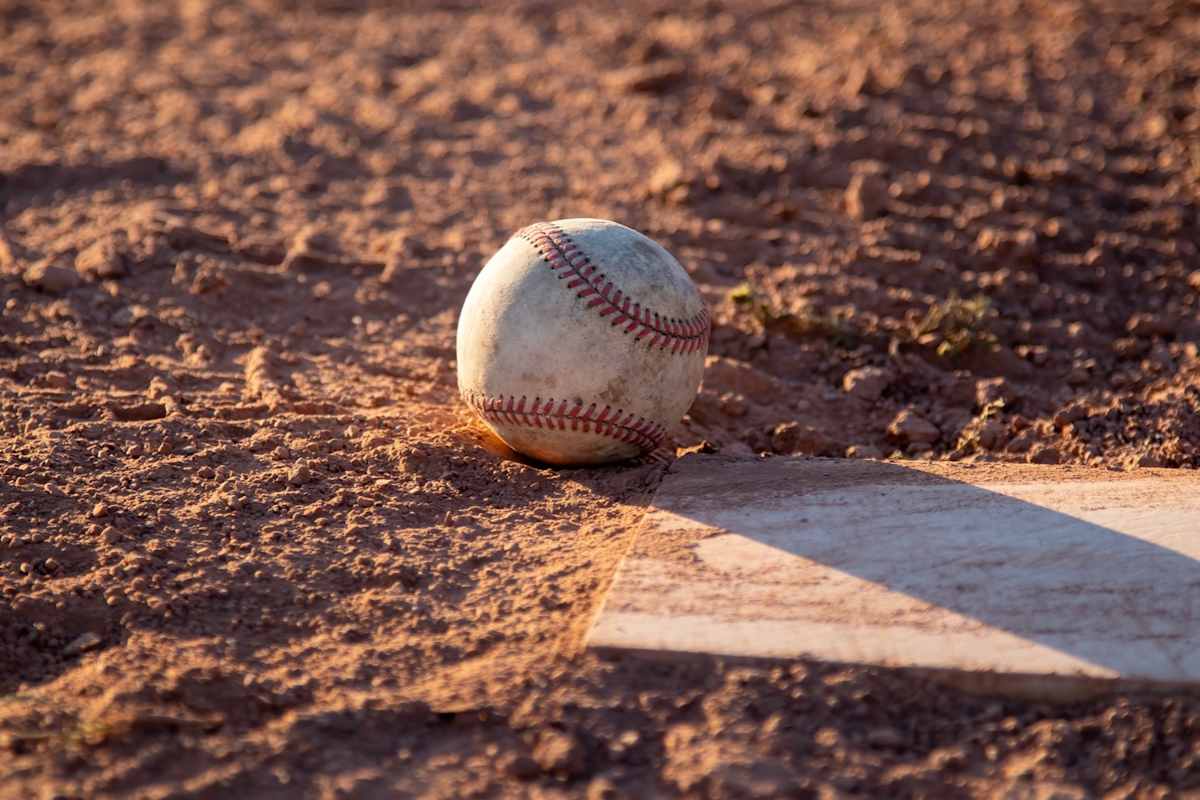
I played baseball for seven years as a kid. Like many, I had dreams of playing in the big leagues one day. It helped that it was the early 1970s, and I was a big Cincinnati Reds fan. The Big Red Machine. I had family in Newport, Kentucky, across the river from Cincinnati. I was born a Reds’ fan. As a player, I fashioned myself a budding Joe Morgan.
I wasn’t fast or strong, so hitting the ball hard or far wasn’t my forte. And I wasn’t going to steal many bases. So much for being like Joe. I had a couple things going for me, though, that made me an All-Star on my Little League team.
I could bunt. I mean I could really bunt, like in the ball hitting my bat and stopping at a spot on the infield that the catcher, third baseman, and pitcher could not get to in time to throw me out, ever. Chances were great they’d overthrow first base in a fool hearty attempt to nail me (that’s baseball lingo). They couldn’t. I led the league in bunt triples (not a real statistic).
The other thing I had going for me was I was a fearless fielder. I played second base and shortstop most of my career. Nothing got past me. And it wasn’t that I was sure-handed with the glove (more baseball lingo). It was because I always got my body between the ball and the outfield. What didn’t land in my mitt, bounced off me. I’d scooped up the ball and throw runners out like clockwork. I’d even turn double plays (baseball lingo), tagging a runner going from first to second and then throwing to first. Literally, nothing got past me (baseball lingo). I took shots off the chest, arms, and face, and never flinched.
Like a lot of professional players, I played on some good and bad teams during my career. Here’s a quick rundown (imagine you’re reading the back of my baseball card for each year):
- Age 8, first year of Farm League (there was no such thing as T-ball back then, thank God): We didn’t win a single game. Froggy Waugh was our coach. He was tall and lanky, with big, black-rimmed glasses and a narrow face. He had a teenager daughter named Rosemary, and the song, “Love Grows (Where My Rosemary Goes),” was popular. The combination of her age and the song left me swooning for her. I remember standing at second on my birthday, thinking we had to win that day because it was my day. I learned it doesn’t matter to the other team if it’s your birthday.
- Age 9, second year of Farm League: I don’t remember much about this year, which is probably how it is for the second year of everything. I don’t even remember what my coach’s name was. It wasn’t Froggy, and Rosemary was out of my life. I doubt I had a sophomore slump (sports lingo) and digressed in ability. We must of have won some games, but not enough to make it worth remembering.
- Age 10, first year of Little League: I played for the Black Sox, one of three teams in my hometown (there were also the Red Sox and Blue Sox). I loved the black shirt, black hat, and black socks we wore. They never had to be washed. I played outfield because I was the youngest player on the team. Nothing happened in the outfield other than chasing balls the infielders couldn’t stopped. One day I snagged (baseball lingo) a line drive. I held up my glove and stepped two feet to the right. I didn’t know I had caught it or even was close to catching it until the ball nearly took my glove off. Instant fame. No one else caught a ball in the outfield that year.
- Age 11, second year of Little League, my breakout year (sports lingo): I was back at second base after my coach, Moon Bailley, brought me in from the outfield to take fungoes (baseball lingo). I stopped everything. He told me he had found his second baseman. A ball didn’t get past me all year. I also perfected the bunt that year and was our leadoff hitter. I hit in front of Dale Alvarez, a brawny 12-year-old, who was the first person I saw hit a homerun over a fence. Rumor was he was fourteen. He could have been twenty-two. I didn’t care. I admired him. We were a good team. Near the end of the season, we played the only other undefeated team in the league, the Blue Jays, on their field. They were one of three teams from the next town over (they all had bird names). We beat them when Dale hit the fence-clearing (baseball lingo) homerun. That’s when the rumors that Dale was too old began. I also made my first All-Star team (a collection of the best players from the three teams in town), although I was a utility player (baseball lingo) and didn’t see much action. We played teams from all over Indiana and Illinois.
- Age 12, third year of Little League: All the good players from the previous year had moved on to Pony League. It was me and a bunch of first-year little leaguers. Floyd Chaudion was our coach. His wore his ball cap (baseball lingo) askew and always had a toothpick in his mouth. He had never coached and, as far as I know, never would again. I was our best player. We were lousy, so lousy I was also our best pitcher. I also played first base because I was the only one who could consistently catch a ball. Of course, when no one else could stop a ball, there wasn’t much need for a good first baseman. We won one game. I pitched it. I think the umpire, whose brother was on our team, helped a lot. Every pitch I threw was a strike, even the ones that hit the opposing batters. Just kidding (baseball humor). I cried a lot that year not because I hated losing. I hated how bad we were in every aspect of the game. Still, I was an All Star, the team’s only one. I was the all-star team’s starting short stop and number nine hitter (baseball lingo). My reputation as a skilled fielder but poor hitter was solidified. In a game against a team from Champaign, Illinois, I didn’t get in front of a groundball, and it went through my legs. E6 (baseball lingo—error on the shortstop) I let in (more baseball lingo) the tying and winning runs. It was the first and only time a ball got past me. Everyone on the team cried but me. Even at that age I knew irony when it rolled between my legs and into the outfield.
- Age 13, first year of Pony League, aka, Babe Ruth League: There was only one Pony League team in town. It brought players from all three Little League teams together. I waited a week after the season started before deciding to play. I showed up at the ball field and saw Moon Bailly was the coach. I shagged (baseball lingo, seriously) a few fly balls, thinking I’d be back in the outfield. Moon asked me if I was there to play. I said, “yes.” He said, “I guess I have my second baseman now.” It wasn’t the reunion I had hoped for though. Again, I could field but not hit, and bunting wasn’t enough to keep me in the starting nine (baseball lingo) in Pony League. I sat the bench (sports lingo) most of the season, playing second base every once and a while for an inning or so or, amazingly enough, pitching whenever Moon was pissed at the other pitchers. Their punishment was to watch the smallest player on the team try to pitch.
- Age 14, second year of Pony League: I bolted the Cicero team and went to play for Walnut Grove, a small rural community. It wasn’t because they offered me more money or any money at all. It was hubris. I wasn’t going to get much playing time (baseball lingo) on the Cicero team. Walnut Grove had fewer player from which to choose. I started second base, where I stayed all year, stopping everything hit to me. I was still a lousy hitter. The last half of the year, I didn’t get a single hit, not even a single. We went from being a good to a lousy team, as no one liked the coach and players quit left and right. The only consolation was the Cicero team wasn’t much better, although still better than us.
Like a lot of professionals, I didn’t realize that my stop in Walnut Grove was my baseball swansong (sports lingo). I had every intention of trying out for my high school team—the next stop to the major leagues.
I got sidetracked though. Before the baseball season started, I found myself running on a country road, wanting to be a pole vaulter on the track team. Instead, I was lured by Coach Petty into being a distance runner. “I don’t think you’re built for pole vaulting,” he said. “I think you need to run and just keep running,” a squinty-eyed smile on his face. He saw something in me I didn’t know existed. It was the second year of Little League all over again and Moon Bailley calling me in from the outfield to take fungoes. I seized the opportunity, and I didn’t have to take baseballs off my face to prove myself.