I was back in Cook County Jail after a two-year pandemic hiatus. Liz—my GA—and I were sitting in the mini-auditorium-turned-classroom waiting for the eleven incarcerated men to be brought to us. We had arranged the chairs in a tight circle—thirteen this week. Next week it would be twenty-three when the DePaul students joined us. This day, Liz and I were there to introduce ourselves and prepare the men for my Inside-Out university course, “Deconstructing the School to Prison Pipeline.” For most of the incarcerated men, it would be their first university course. Many had only recently gotten their GEDs.
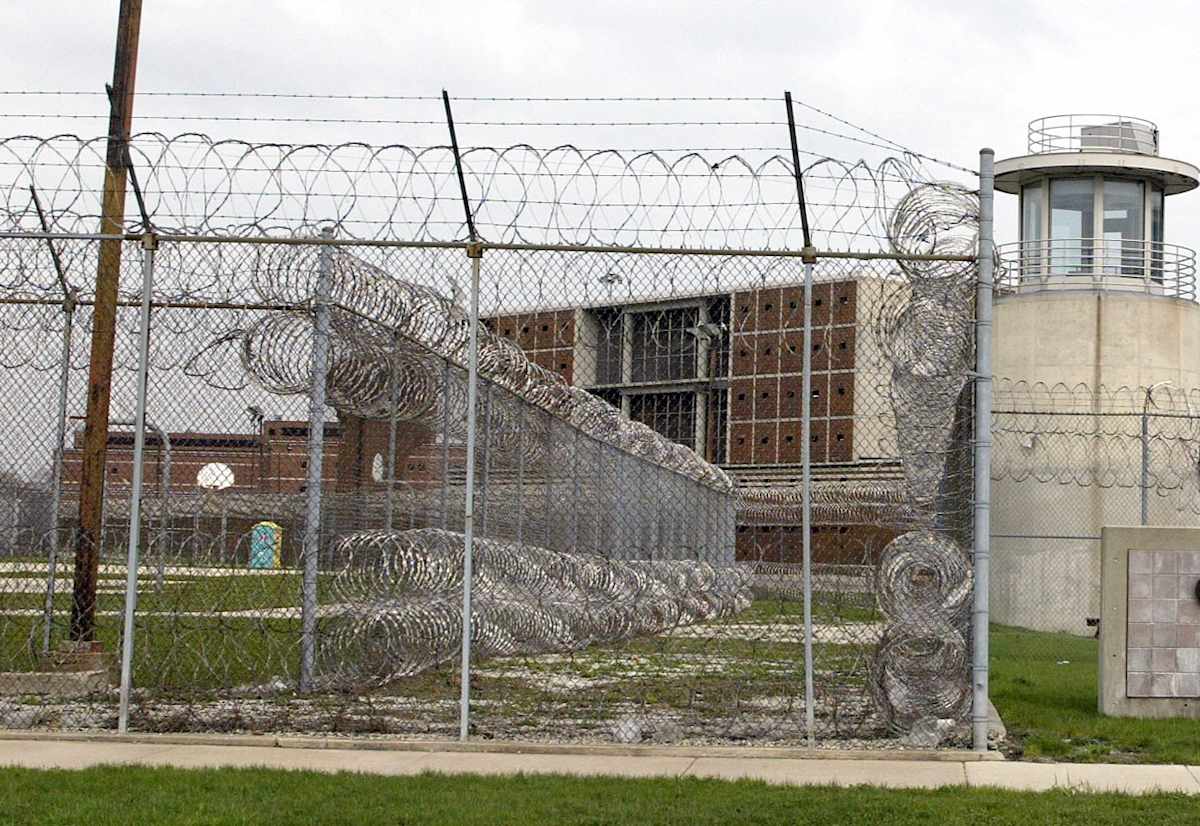
I was teaching the course for the third time in Cook County (aka “26th and Cal” and “Hotel California”), one of the largest county jails in the nation. Spreading across eight city blocks in Chicago’s Little Village neighborhood, it included ten divisions and housed upwards of 9,000 incarcerated individuals, the vast majority of whom were awaiting trial.
Ironically, our classroom was across the hall from the small conference room where I taught writing to incarcerated females twenty years earlier. That experience ended abruptly. We published the women’s writing in The Journal of Ordinary Thought as part of the Neighborhood Writing Alliance. I left for the summer, intending to return in the fall with a new group. We weren’t invited back. Word was the jail wanted to focus on basic skills—GED preparation, basic literacy—whereas we, they said, focused on critical literacy, emancipatory action, and on having the women critically analyze their lives and communities.
Inside-Out was my ticket back inside. For the next ten weeks, incarcerated men and university students would grapple with the role of education in perpetuating systemic inequity and injustice. We would read some Foucault and Freire and a lot of testimonials, personal narratives, and autobiographies of incarcerated and formerly incarcerated individuals such as Albert Woodfox, Jarrett Adams, and Leonard Peltier. We would talk about the failure of the “school to prison pipeline” metaphor to capture the complexity of people’s experiences with education and other institutional structures. Or maybe that’s the metaphor’s purpose: to individuate responsibility and leave existing institutional structures unscathed? It would be our task to decide.
The metaphor was problematic for what it suggested about individuals and society, as if so much history and so many lives can be explained away by a metaphor of linear movement from one point to another. We would critique and deconstruct it like the title of the course suggested. We would identify the purpose it serves in the long history of American racism and subjugation. We would also deconstruct the institutional structures—among them the education and criminal justice systems—and how they perpetuate systemic racism and inequity. And ultimately, we would imagine and plan how things could be different. We would do all of this in ten weeks.
We were in the right place to do it. Liz and I were waiting on eleven individuals who had most likely experienced firsthand much of what we were going to talk about. We were there to help them name and critique those experiences.
Dressed in the oversized beige jumpsuit that all incarcerated individuals wore, Elden stood out among the eleven. At six feet, five inches, he was not only taller than the rest, but he also stood straight as an arrow. No slouching, no posing, no refusal to meet your eye, everything about him said, “Here I am. See me because I see you.” And at forty-five years old he was twice the age of most of the men and ten years older than the next closest.
He had a close-cropped black beard speckled white and a high forehead that gave way to a hint of hair on top. His deep-set dark eyes seemed to never blink even as they never stopped moving. They were clear and soft, conveying an ease and interest countered only by his square jaw and tightly closed mouth.
Elden had been in Cook County for five years. Awaiting trial. Think about that. Elden. Five years. In Cook County. Locked up. Five years. Separated from family, friends, community. Awaiting trial. Not convicted of anything. Five years, in effect, in limbo. Innocent until proven guilty. A real-life personification of “you can never leave” this place.
Elden’s experience, by any measure was extraordinary but not unusual. I knew incarcerated men awaiting trial for one, two, sometimes three years. They each had their own reasons why. Prosecutorial and defense delays kept them shackled, accused but not convicted. Technically—and in reality—not criminals. At least not yet and possibly never.
That first day, Elden sat back a little from the circle, his chair a few inches behind everyone else’s. He was watching the others. He was also the only one making eye contact with me. He was the only one smiling, mainly with those eyes.
The others, respectful, apprehensive, unsure of what this was all about, postured as a defense mechanism. They mumbled responses to questions. It was school all over again for them. I had to change that.
Not for Elden though. He nodded, pushed his chin out, narrowed his eyes, as he contemplated what others said. Put him in some khakis and a button-down shirt, and anyone who walked in would have thought he was the instructor.
He called me “sir.” I said, “No, that’s unnecessary. He continued to do it. I said, “You can call me Chris.” He said he didn’t know if he could, but he would try. “No disrespect,” he added, and I didn’t know if he was saying he didn’t intend for his calling me sir to be disrespectful or that not to call me sir would be disrespectful.
That first day, Liz and I wanted to set a tone, give the incarcerated men opportunity to acclimate to us, and let them know what the next ten weeks are about. We moved into an ice breaker. Everyone was sharing snippets of their lives, loosening up, laughing, wanting the others to hear them. They talked about family, kids, kids they haven’t seen in a year or more, bad choices, hobbies, aspirations. Most of them reminded me of the high school kids I used to teach. Eighteen, nineteen, early twenties. No one said why they were there, and no one asked.
Elden said he misses Bubbles, his cat. “Man, I love my cat.” He ignored a few others’ snickering. “Didn’t know I could miss her so much.”
“He’s got a picture of that cat, man, in his wallet,” said another guy a couple of chairs over. Elden’s eyes opened wider, and he grinned.
“Where’s Bubbles?” I asked.
“With my parents,” he said, as if he needed to convince himself of that. “He’s like twelve now.
“When was the last time you saw him?” I asked.
“Five fuckin’ years,” a guy a couple chairs over from Elden said. It was obvious Elden talked about his cat a lot. Everyone knew about Bubbles.
Elden glanced at the guy. “Yeah,” he said. “Five years.”
“Five years?” I said. I try to catch my breath. Five years in here.
Everyone was silent as they contemplated that. They knew what it meant. All I knew was it sounded crazy and that was what I said: “That’s crazy.”
A chorus of “yes, sirs,” rang out like “Amens."
“Shit,” a guy who couldn’t have been more than eighteen said, “That’s messed up.”
Elden was group leader. He was the old man, and the younger ones deferred to him. Two weeks later, when I needed to set the incarcerated men straight on what they can’t ask the university students, it was Elden who piped up and said to everyone, “Don’t fuck this up. You here to learn. If you can’t do that, don’t fuck it up for others.” Others jumped in with, “Yeah, man.” Everyone nodded. End of discussion. No more concerns.
Everything Elden said and did during those weeks confirmed his place among the class as leader. He read the assignments, wrote extensive journal entries, took the lead in group discussions, and sat back and listened to the others when we were in our circle. He praised the incarcerated men’s and the university students’ thinking. Again, if you didn’t know it, you would have thought he was the instructor.
Week five, Elden didn’t enter the classroom but stood by the door. The Inside students mingled with the Outside students as they found their seats. We had created community. We had our routines. Inside students sought out outside students and vice versa. Everyone was comfortable. The Outside students hung on everything the incarcerated men said, and the incarcerated men praised the kids for being in college and doing something with their lives. And vice versa.
I took my seat after walking around the circle, shaking hands and handing back journal responses. Elden, though, was still by the door. A correctional officer was standing behind him. Elden nodded for me to come over. “What’s going on?” I asked. “Court day?”
Elden snickered. “No, sir,” he said. It’s the first sir in a couple of weeks. “I’m leaving.”
“Whoa!” I said. I went to hug Elden, but catching the CO’s eyes, stopped. Instead I patted Elden on the shoulder. “That’s great.”
“Time served,” he said, his eyes suddenly teary. “They gave me time served,” he repeated, and I didn’t know if he was happy or upset. “I pleaded. I didn’t want to, but…” His voice trailed off, and for the first time, his eyes weren’t on me. It was like he was thinking he let me down, or maybe he let himself down.
“But you’re going home—”
“I wanted to go to trial,” he said. He shook his head. “I couldn’t wait no longer.”
“Elden,” I said. “That’s really good, isn’t it? You’re going home. You’re going to see Bubbles. We’re going to miss you.”
Elden let out a wispy laugh. “I asked if I could stay until the class was over.”
“Today. You did!”
“No, the rest of the class. They thought I was crazy, but man, I ain’t taken a college class before. Now I got to give it up. I wanted to finish it.”
I nodded. I couldn’t think of anything to say. I got it, but I couldn’t imagine what all this meant to Elden and to the others.
“Hell, I figured five more weeks after five years,” Elden said. “What’s it matter? I’d do it to get the college credit.”
The CO was now a couple of feet behind Elden. Elden sensed it.
“They said no, so I asked if I could at least say bye,” he said.
“You can’t stay today?”
“No.”
We’re going to miss you, man,” I said. “I’m so happy for you though.”
I hugged him, and the CO started toward us but stopped when I pull away. Elden looked over my shoulders at the group before turning and walking away. They were all watching.
In five weeks, all this played out again but in a slightly different way. Good-byes all around. The ten remaining men finished the class, get their college credit, and made claims about what needed to happen to help others avoid their fate. The room was packed with university administrators and jail administrators. It was a feel-good moment in a place where there are few.
Many of the university students cried when the Inside students were ushered out and shackled in the hallway and led off. They stood in the doorway, saying good-bye and waving as the men move slowly down the hall, single file.
The Outside students, Liz, and I waited until they were gone, then made our way through security checkpoints and into the van and back to the university. I drove, but my ears, like every week, were attuned to what the DePaul students were saying about their experiences.
As significant as the last ten weeks was for the incarcerated men, it didn’t match what it meant to the university students. The incarcerated men came to name their experiences and understand more succinctly how those experiences were shaped by larger systemic inequity of our nation. The university students understood this, too, but they also knew the depth of brilliance and compassion that existed within the men they shared the classroom space with. They’ll never look at an incarcerated person and the criminal justice system in the same way. And that was the whole point.