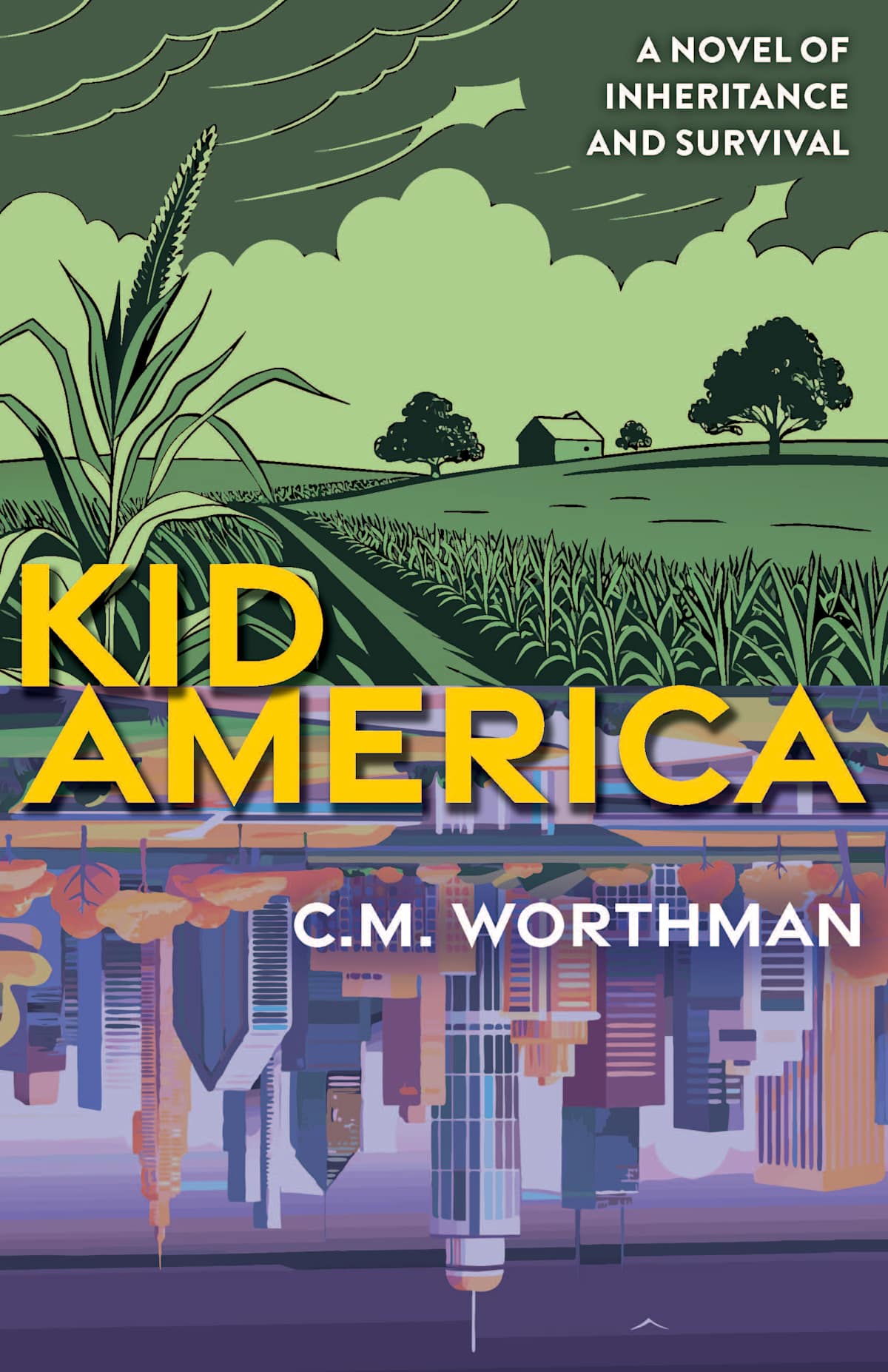
A couple of weeks ago I rolled out Kid America’s cover for everyone to see. Well, it’s changed a bit. Take a look and guess how it has changed. Below is the first reveal. At the top is the latest and final one.

Yep, the difference is obvious. Aimé, KA’s Production Director, and I discussed the cover quite a bit after the first reveal. She pushed for a color scheme that would better represent the novel’s themes. I tend to let things be, but she wanted to make sure it captured exactly what I wanted. So here you have it. I like it much more than the first reveal.
I set up accounts with IngramSpark and KDP (Amazon) this week and made some marketing decisions. Although the release date isn’t until November 3, I’ll have access to the novel on July 30. That’s still three months away. The push will be to generate as many pre-release orders as possible.
What am I doing now? I’m gritting my teeth and setting up an Instagram account dedicated to young adult and middle grade literature—mine and others’. Over the next couple of weeks I’ll be updating my website to promote KA.
All of this is happening in the middle of the debate about AI-assisted and AI-generated novels. The latest and loudest accusations are around Shy Girl (Hachette). I don’t know the full story, but one analysis of the novel determined it to be 78% AI-generated. The novel has been pulled from the shelves by the publisher.
There is a part of me that says stay out this discussion. There’s also a part of me that knows what is happening casts suspicion onto everyone publishing or trying to publish. To enter the discussion will raise some people’s suspicion. Not to enter the discussion only delays questioning, especially if a novel does well. This is the times we live in.
For me to make claims about my own writing is an invitation for others to investigate those claims, which is fair. I suspect every author, particularly every newly published author, is going to have to live with this suspicion and be explicit about their use of AI. I don’t mind that.
I have never used AI to write anything I claim as my own. I have never used AI to revise, edit, or do anything else to anything I’ve written. In the case of KA, I have a file of over twelve drafts and lots of notes accumulated over the last four-plus years as evidence of its origin and the developmental process it has gone through.
That said, I have used AI to create surveys and rubrics for instructional purposes and have included a statement to that effect on everything generated. I can’t see using it for anything else. I don’t want to use it for anything else.
I’m only beginning to grapple with where I stand on others’ use of AI, especially its use to generate content. I do know that writers or creators are obligated to credit or reference from where ideas and others’ language used verbatim or paraphrased come.
Intuitively, I feel—and I mean, I feel as in an embodied feeling—there is something inherently unethical and antithetical to the creative process to rely on AI to generate anything anyone would ultimately claim as their own. Even when credit is given for AI-generated or -supported text, I have a hard time accepting the work as a product of the creative process as I understand and live it. I feel a part of that process has been usurped by AI. What immediately comes to mind, especially when the use of AI isn’t made explicit, is theft, deception, and laziness (take your pick). Regardless of whether it’s any of these things, AI-generated and -supported text lacks the depth of process needed for an author to claim it as their own. And it reflect on the work of others. It’s like taking a shortcut in a distance race. It’s cheating, and the cheating diminishes the efforts of others